A giveaway can create a burst of attention and a list of new contacts, but it becomes a lead-generation system only when the follow-up is planned. Some people entered for the prize, some are interested in the service, and some may not have agreed to ongoing marketing. The sequence must protect those differences.
Quick answer: What is a lead nurture sequence?
A lead nurture sequence is a planned series of messages and actions that helps a contact move from initial interest toward a relevant next step. After a giveaway, confirm the entry first, then provide useful information, identify explicit interest, present an optional service offer, and route qualified responses to the correct owner. Only contacts with the appropriate permission should receive ongoing commercial email.
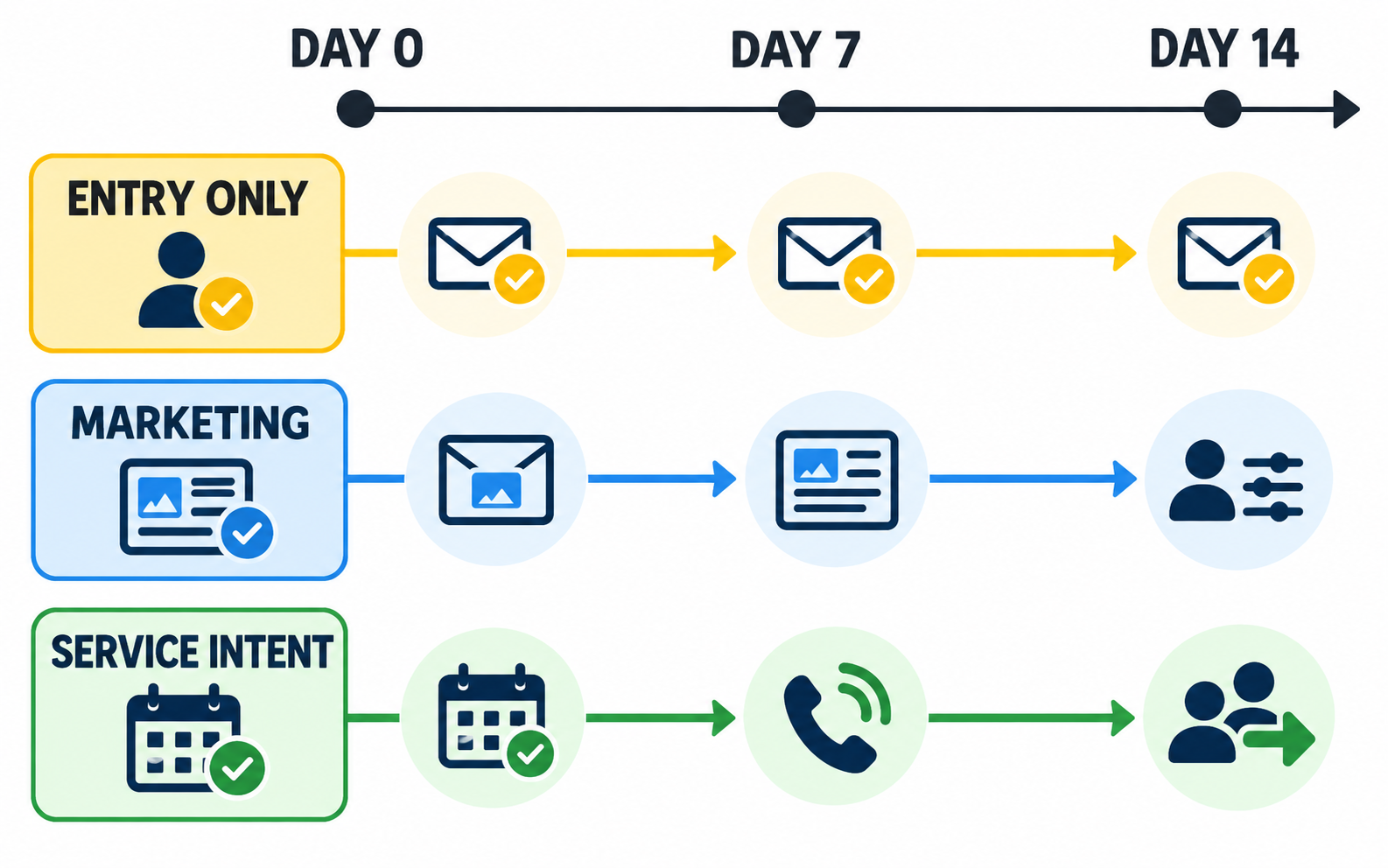
Start with three distinct paths
The follow-up cannot repair a campaign that blurred entry, marketing permission, and service intent. Define each path before launch.
- Entry-only path: confirms participation and sends only promotion-related information permitted by the rules and applicable law.
- Marketing path: sends the educational and promotional sequence only to contacts with the required permission.
- Service-intent path: routes an explicit estimate, consultation, or appointment request to sales or operations with a stated response target.
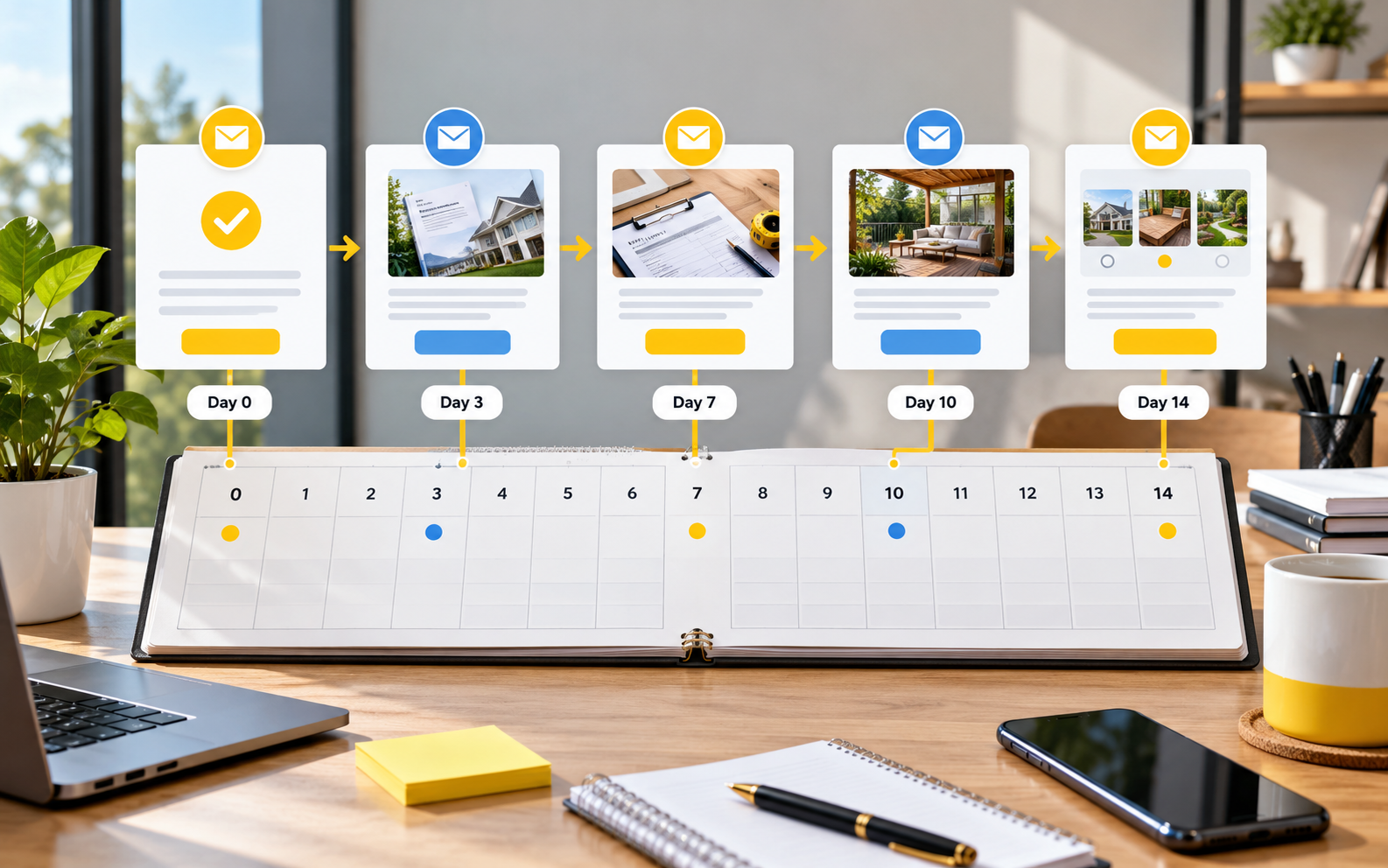
The 14-day giveaway follow-up sequence
| Day | Purpose | Message | Primary action |
|---|---|---|---|
| 0 | Confirm | Receipt, eligibility reminder, dates, rules, privacy, and what happens next | View entry details |
| 1 | Deliver value | Short checklist or guide tied to the service problem behind the prize | Read the guide |
| 3 | Educate | One common problem, warning sign, or decision the audience should understand | See the explanation |
| 5 | Show proof | Permissioned example with scope, process, and limits; no guaranteed result | Review the example |
| 7 | Invite intent | Optional estimate, consultation, or appointment with a clear response expectation | Request service |
| 10 | Remind | Useful recap plus the promotion deadline or next milestone when rules permit | Return to the campaign |
| 14 | Close and sort | Final message, preference option, and a clear way to continue or stop | Choose the next step |
Day 0: confirm without turning the receipt into a sales pitch
Tell the entrant that the submission was received, identify the promotion, restate important dates or eligibility limits, link to the official rules and privacy notice, and explain how winner communication works. A valid entry is not automatically a request for a salesperson to call.
Record the source, campaign, consent choice, timestamp, and the version of the form or notice shown. Keep that evidence with the entry record.
Days 1 through 5: earn attention with useful information
Help the audience understand the service problem connected to the campaign. A home-comfort giveaway might lead with an HVAC readiness checklist, explain a sign of inefficient operation, then show a permissioned maintenance example. Each message should do one job and point to one next action.
Day 7: invite explicit service intent
Present an optional service action only after the recipient has received the promised confirmation and useful information. State what the offer includes, who it is for, the service area, and what happens after submission. Preserve campaign attribution through the form and set a realistic response expectation on the thank-you page.
Days 10 and 14: close the loop
The day-10 message can remind the audience of a promotion milestone while adding one final useful point. It should not manufacture urgency or change the published rules. The day-14 message should close the automated sequence and offer clear choices: continue receiving a relevant content category, request service, update preferences, or unsubscribe.
Sales handoff rules
- Create a sales task only when the contact explicitly requests an estimate, consultation, appointment, or reply.
- Include the requested service, service area, source, campaign, consent record, and the content that prompted the request.
- Do not create a sales task from an open alone; treat a click as context unless the recipient also requests contact.
- Stop the automation after an unsubscribe, complaint, invalid address, or another defined exclusion.
- Prevent simultaneous sequences from producing duplicate messages or conflicting offers.
- Give each routed request one owner, one response target, and one outcome field.
Compliance and preference controls
The FTC CAN-SPAM guide requires accurate header and subject information, identification when a message is an advertisement, a valid physical postal address, a clear opt-out method, and honoring opt-out requests within 10 business days. Operationally, suppress an opted-out address before the next automated message whenever the platform can do so.
How to measure the sequence
Measure the sequence as a path, not as seven isolated emails. Preserve campaign parameters through the landing page and service form. Useful measures include delivered messages, unique clicks, service-form starts and completions, replies, appointments or estimates requested, unsubscribes, complaints, invalid addresses, duplicate-contact suppression, and handoff response time.
Prelaunch checklist
- Entry confirmation matches the official rules and does not imply an unrequested sales call.
- Marketing permission, service request, and entry status are stored separately.
- Every message has one purpose, one primary action, accurate sender information, and a working unsubscribe path.
- The service CTA preserves campaign attribution and reaches a tested confirmation state.
- Suppression, duplicate-sequence, and frequency rules are active before enrollment.
- A seed contact has completed the full path, including routing and analytics evidence.
- Sales owners know which signals create a task and which do not.
Three direct answers
How should a business follow up with giveaway entrants? Confirm the entry first, then send only the promotion notices and marketing messages allowed by the rules, permission record, and applicable law. Use helpful service content to identify interest, and route only explicit service requests to sales.
How many messages should the sequence contain? There is no universal number. This seven-touch, 14-day model is illustrative. Adapt it to the promise, audience, consent, channel, frequency controls, and evidence from testing.
What makes a giveaway lead warm? A warm lead has shown relevant intent, such as requesting an estimate, choosing a service, replying with a need, or booking time. Entering for a prize or opening an email does not establish sales intent by itself.
Build the follow-up before launch
Sweepstakes4U can help organize the entry, useful content, service invitation, routing, suppression, and measurement as one reviewable flow.
Build Your Follow-Up Sequence