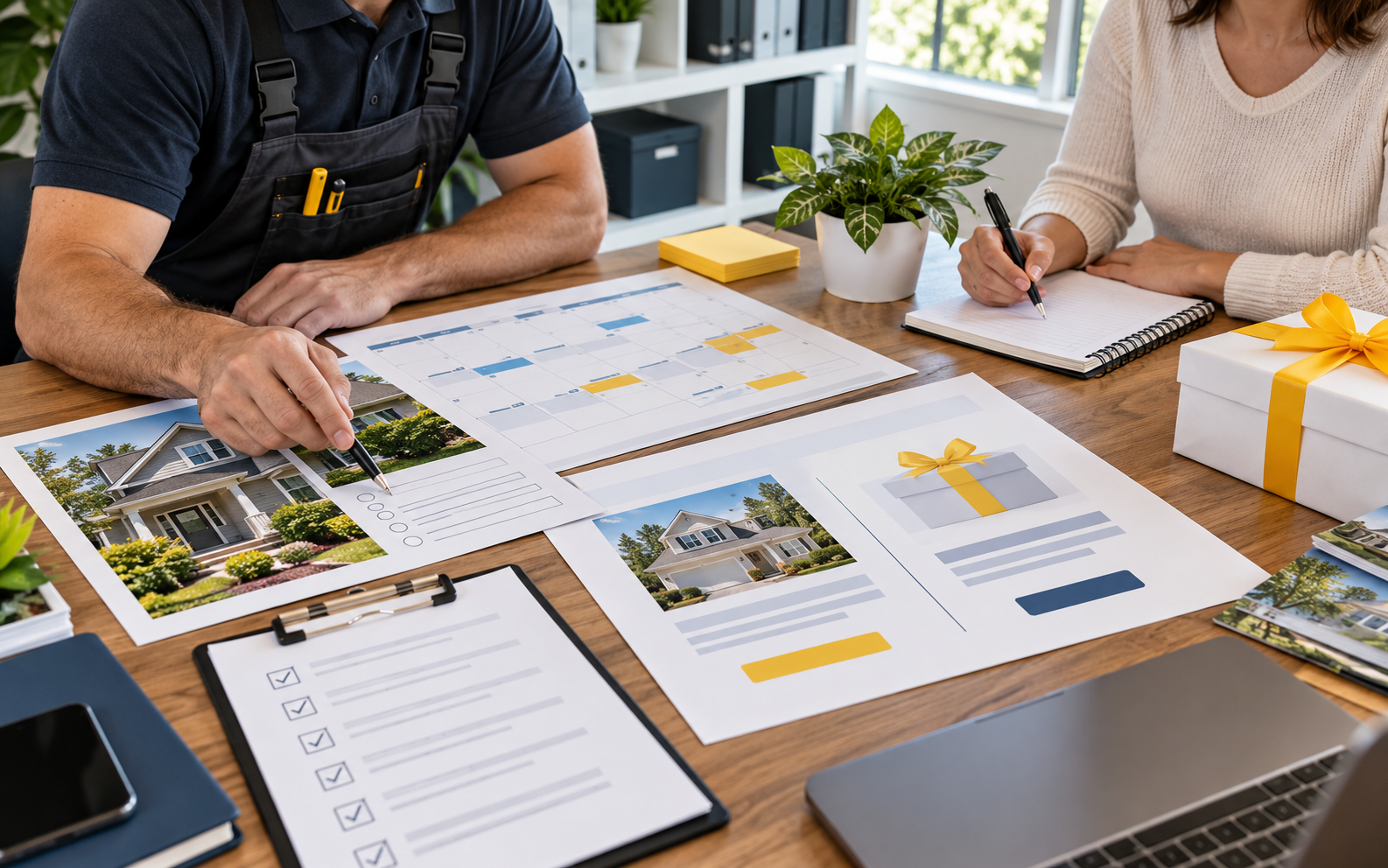
A giveaway can create attention quickly. A service offer can create revenue quickly. Combining them can work well, but only when each has a different job.
The service offer should help a qualified customer take the next step now. The giveaway should give a broader group a reason to engage, opt in, and remember the business. When both are presented as versions of the same discount, customers can learn the wrong lesson: wait for another promotion instead of acting when the service is needed.
The strongest structure protects the value of the core service, keeps the promotion easy to understand, and gives the business a useful follow-up path after the winner is selected.
How can a service business promote an offer without training customers to wait?
Keep the service offer narrow, time-bound, and tied to a real reason to act. Use the giveaway as a separate engagement path, not as a larger future discount on the same service. Make the regular value visible, limit the offer to a specific package or scheduling window, and return to normal positioning when the campaign ends.
Reward action without teaching delay. The customer who needs the service now should see a credible reason to book. The person who is interested but not ready should have a lower-commitment way to enter the brand's follow-up audience.
The best-case campaign structure
Consider an illustrative HVAC company preparing for winter. It wants to fill preventive-maintenance appointments without making customers believe that tune-ups are only worth buying when a coupon appears.
The campaign uses two coordinated paths:
Service path
Book a qualifying seasonal tune-up during the campaign window and receive a clearly defined add-on, such as priority scheduling or a modest fixed-value accessory.
Giveaway path
Enter for a home-comfort prize that is relevant to the audience but does not replace the paid tune-up.
The service path is for customers with current intent. The giveaway path is for prospects who are earlier in the decision cycle. Both paths can use the same campaign theme, but they should have different calls to action, expectations, and follow-up messages.
Why the prize should support the service instead of replacing it
Should a giveaway prize be the same as the service being promoted? Usually, no. A free version of the exact core service can make the paid offer look temporary or negotiable. It can also attract entrants whose only goal is avoiding the purchase.
A more useful prize is adjacent to the service. For an HVAC company, that might be a smart thermostat, an indoor-air-quality package, or a home-comfort credit with carefully written terms. For a landscaping company, it might be a seasonal outdoor-living package rather than a free year of routine maintenance.
An adjacent prize does three things:
- It keeps the campaign relevant to the right audience.
- It preserves the normal value of the core service.
- It creates natural follow-up topics even for people who do not win.
How to make the service offer feel valuable, not desperate
A strong offer does not need to be the deepest discount. It needs to remove a specific reason a qualified customer might delay.
- Convenience: priority scheduling, a reserved appointment window, or simplified booking.
- Certainty: a fixed package scope, written inspection checklist, or clear next-step recommendation.
- Added value: a relevant add-on with a known boundary.
- Risk reduction: a transparent consultation, diagnostic credit, or satisfaction commitment the business can consistently honor.
Avoid stacking several discounts, bonuses, and prize messages into one headline. If customers cannot explain the promotion in one sentence, the campaign is trying to do too much.
How to combine the offer and giveaway on one landing page
The page should make the two paths obvious without turning them into competing promotions.
- Lead with the seasonal customer problem and the core service outcome.
- Present the service offer with its exact scope, dates, and eligibility.
- Add a clear booking CTA for people ready to act.
- Introduce the giveaway as a separate optional path.
- Explain the prize, entry period, eligibility, selection process, and link to complete terms.
- Use a distinct entry CTA and obtain the appropriate marketing consent.
- Set expectations for confirmation and follow-up.
Do not imply that a purchase improves the chance of winning unless the promotion has been designed and reviewed to permit that structure. Requirements vary by jurisdiction and promotion type. Use qualified legal review for official rules, eligibility, disclosures, and any purchase-related mechanics.
Google's Business Profile guidance also says promotions, contests, and giveaways should clearly link to terms and provide clear guidelines and qualifications. Keep those terms easy to find wherever the campaign is promoted.
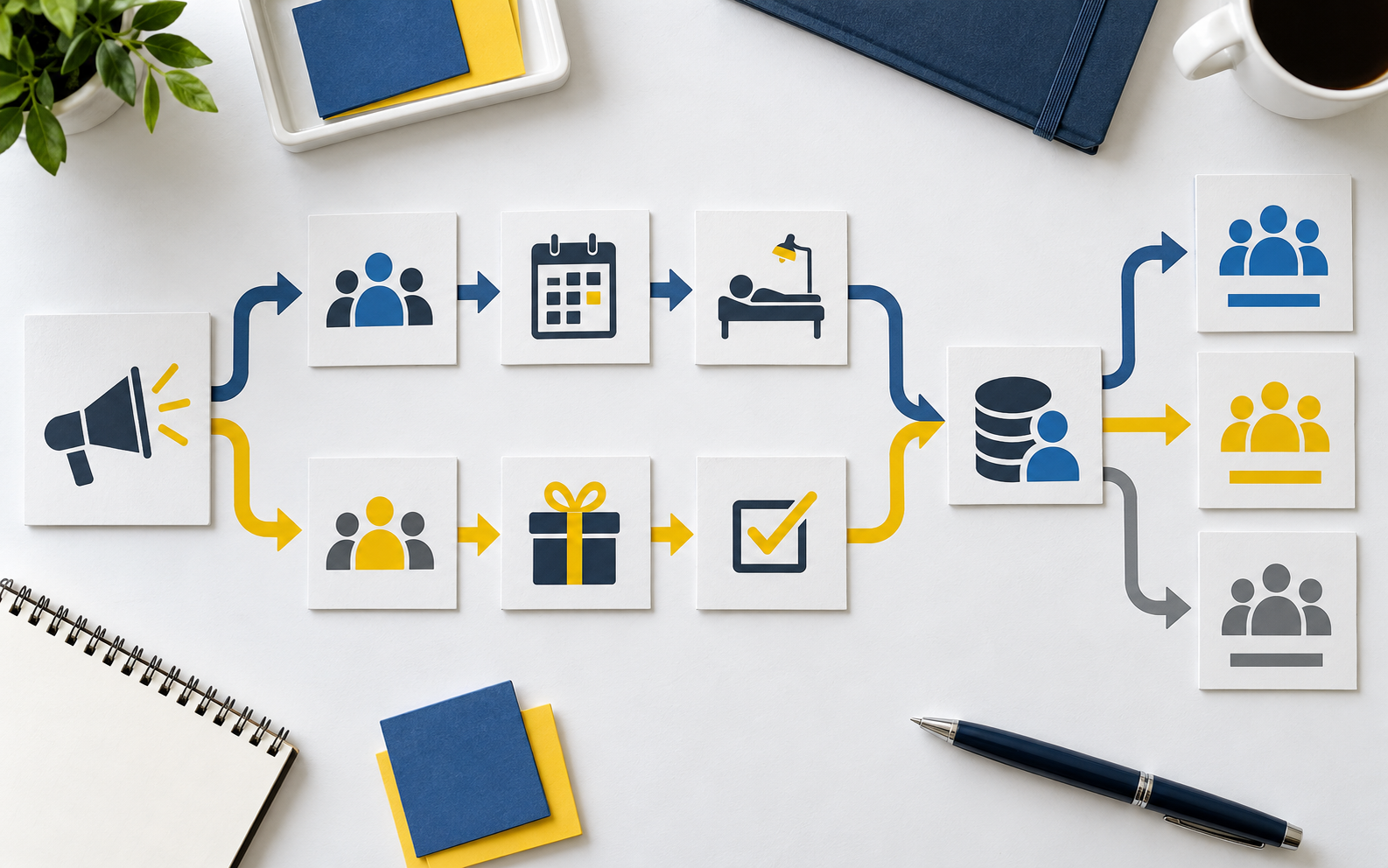
The illustrative best-case journey
Day 1: A homeowner sees a post about preparing the home for colder weather. The message leads with the service outcome, not the prize.
Day 2: The homeowner visits the landing page. They are not ready to book, but the adjacent prize is relevant, so they enter and choose to receive campaign updates.
Day 3: The confirmation message restates the entry details and offers a useful checklist related to the seasonal service.
Day 5: A follow-up explains the limited service package, the reason for the deadline, and what is included. The booking CTA is direct, but the message does not pretend every entrant is sales-ready.
Day 9: The business shares a practical customer question, a short proof point, and the service offer again.
Campaign close: The winner process follows the published terms. Non-winners receive a clear closeout message, a useful resource, and a final service CTA without inventing a consolation discount.
Afterward: The business separates booked customers, qualified non-bookers, and low-intent entrants. Each group receives an appropriate next step instead of the same sales sequence.
What success looks like
The best-case outcome is not the largest entry count. It is a campaign that produces three usable groups:
- Customers who booked the service during the campaign.
- Qualified prospects who expressed a relevant need but were not ready to schedule.
- Broader entrants who can remain in a lower-frequency nurture audience if they gave valid consent.
Track the paths separately. At minimum, measure landing-page visits, service CTA clicks, giveaway entries, qualified leads, booked appointments, and opt-outs. This prevents a large entry total from hiding a weak booking path.
Guardrails that protect long-term value
- The normal service value is visible and credible.
- The offer has a real start and end date.
- The offer solves a timing, convenience, certainty, or risk problem.
- The prize is relevant but does not replace the core service.
- Booking and entry are separate actions.
- Terms, qualifications, privacy language, and consent are easy to find.
- Staff can explain the promotion consistently.
- The post-campaign plan returns to normal positioning.
Never use a prize or discount in exchange for a positive review. Google prohibits incentivized reviews, including discounts or free goods offered for posting, changing, or removing a review.
Frequently asked questions
How can a service business promote an offer without training customers to wait?
Use a narrow offer tied to a real scheduling or service need, keep the regular value visible, and end the offer when promised. Do not run the same discount continuously. Give future prospects useful content and a separate giveaway path instead of repeatedly escalating the discount.
Should a giveaway prize be the same as the service being promoted?
Usually not. An adjacent prize keeps the audience relevant while protecting the value of the paid service. The prize should complement the customer's goal without making the core service appear free, temporary, or negotiable.
How do you combine a service offer and a giveaway without confusing customers?
Give each a distinct purpose and CTA. The service offer is for people ready to act now. The giveaway is an optional engagement path for people who are interested but earlier in the decision cycle. Explain the scope, dates, eligibility, consent, and follow-up for each path.
Build a balanced promotion
A service offer and a giveaway do not need to compete. The service offer can convert current demand while the giveaway captures future demand. The key is to preserve the value of the core service, choose an adjacent prize, separate the calls to action, and follow through on every promise.
Design a balanced offer
Sweepstakes4U helps local service businesses connect the prize, entry experience, follow-up, and measurement plan without turning the service into a permanent discount.
Get Promotion Ideas