
One seasonal promotion can do more than create a short burst of entries. In the best case, it leaves a local service business with a permissioned audience, a tested offer, useful creative, a cleaner measurement plan, and a follow-up sequence that can be adapted for the next campaign.
That outcome does not happen automatically. It comes from designing the promotion as a small operating system instead of a one-time giveaway. The offer, landing page, data fields, campaign links, follow-up rules, and post-campaign review all have to connect.
Quick answer: How can a case study help a local service business generate leads?
A lead generation case study helps a local service business by turning an abstract campaign idea into a repeatable sequence: define a qualified audience, choose a relevant seasonal offer, collect only useful information with clear consent, follow up according to stated expectations, measure each channel, and save the winning assets for reuse. The value is not the story alone; it is the operating checklist the story reveals.
The setup: a seasonal promotion with a second job
Imagine a local heating and cooling company preparing for the first cold-weather service window. Its immediate goal is to build awareness for seasonal tune-ups. Its longer-term goal is to create a reusable audience and campaign framework for future maintenance, indoor-air-quality, and replacement offers.
The company chooses a prize that matches the service decision: a home-comfort package with a service credit and practical seasonal items. The prize is relevant enough to signal household interest, but the promotion does not make a service purchase a condition of entry.
Before launch, the team defines the second job of every campaign element. The landing page must collect enough information to route leads. Each promotional link must identify its source. The confirmation message must set expectations. The follow-up sequence must separate broad interest from immediate service need. The post-campaign review must produce a reusable kit.
Step 1: Build the campaign around a useful customer signal
The team starts with the customer decision it hopes to support, not with a generic high-value prize. It asks which households are likely to consider a seasonal service, what geographic area can actually be served, and what next step would feel reasonable after entry.
The entry form keeps friction proportional to the goal. It asks for contact information, service area, a simple home-comfort interest, and marketing permission where required. It does not turn the form into a disguised sales questionnaire. Fields that are not used for routing, eligibility, or follow-up are removed.
This creates the first reusable asset: a small, stable set of qualification fields and routing rules. Future campaigns can adapt the offer while preserving the same core data structure.
Step 2: Treat the landing page as a reusable conversion template
The landing page explains the prize, who may enter, the entry period, how the winner will be selected, what information is collected, and what entrants should expect next. The service offer is clear but separate from the chance to win.
The team writes the page in modules: campaign headline, seasonal context, prize details, eligibility, form, consent language, next-step message, and official-rules link. When the next promotion arrives, the team can replace the seasonal modules without rebuilding the full experience.
The legal and operational review happens before traffic starts. FTC small-business guidance says sweepstakes-type promotions that require a purchase are illegal in the United States and notes that state requirements can vary. The campaign owner confirms the applicable rules with qualified counsel rather than treating a prior campaign as permanent legal approval.
Step 3: Make every channel measurable before launch
The team gives each email, social post, partner placement, paid ad, and field-team handout a distinct campaign link. Google Analytics supports campaign fields such as source, medium, campaign name, term, and content; a consistent naming convention lets the team compare traffic without inventing new labels after launch.
The campaign brief records the exact naming pattern and the destination page. That becomes the second reusable asset: a measurement worksheet that can be copied before each campaign. The team also decides which downstream actions matter, such as completed entry, requested quote, booked appointment, or qualified follow-up.
Measurement is used to answer practical questions: Which channel drove entries? Which sources produced service-area matches? Which message produced a useful next step? A large top-line audience is not automatically the best audience for the service team.
Step 4: Separate confirmation from marketing follow-up
Immediately after entry, the entrant receives a confirmation that explains what happened, what comes next, and where to find the rules. Marketing follow-up is planned as a separate sequence aligned with the consent and expectations captured on the form.
A representative sequence might include a useful seasonal checklist, a reminder about the service offer, a winner announcement or campaign close, and a final invitation to request help. The sequence is short, relevant to the original context, and easy to stop.
The FTC's CAN-SPAM compliance guide explains that commercial messages must use accurate routing information and subject lines, include a valid postal address and opt-out method, and honor opt-out requests. The company reviews its actual messages and sending process for compliance; participating in a giveaway is not treated as blanket permission for every future campaign.
This creates the third reusable asset: a follow-up framework with slots for confirmation, value, offer, reminder, close, suppression, and handoff. The copy changes, but the operational checkpoints remain.
Step 5: Route leads by readiness instead of treating every entry alike
The team does not hand the entire entry list to sales with the instruction to call everyone. It defines simple segments before launch: outside service area, eligible but no stated service interest, relevant future interest, and near-term request.
Near-term requests follow the normal service workflow. Future-interest contacts receive the planned nurture path when consent permits. Prize-only or out-of-area entries remain outside the active sales queue. The winner-selection process stays separate from lead scoring so eligibility and marketing value are not confused.
When a business uses advertising platforms to re-engage customers or prospects, it must follow the platform's rules and applicable consent requirements. Google Ads describes “your data” segments as audiences built from people who interacted with the business, including customers who shared information, and provides specific Customer Match policies and controls.
The reusable asset here is not merely a list. It is a documented segmentation rule that tells the next campaign what each status means and which team owns the next action.
Step 6: Run a post-campaign review that produces assets, not anecdotes
After the promotion closes, the team compares channel performance, qualification signals, follow-up engagement, operational friction, and sales handoff quality. It does not declare success from entry count alone.
The review asks what should be kept, changed, or retired. Was the prize aligned with the target customer? Did the landing page answer the common questions? Were the form fields used? Did source naming stay consistent? Did the service team receive enough context? Did any consent, eligibility, or fulfillment issue appear?
The output is a reusable campaign kit: approved page modules, the form schema, source-naming convention, creative variants, follow-up sequence, segmentation definitions, reporting view, owner checklist, and a short decision log. The next campaign begins with this kit instead of a blank page.
What the best case actually looks like
The best case is not a viral giveaway or a perfect conversion rate. It is a campaign that creates useful demand now while lowering the cost and risk of the next campaign.
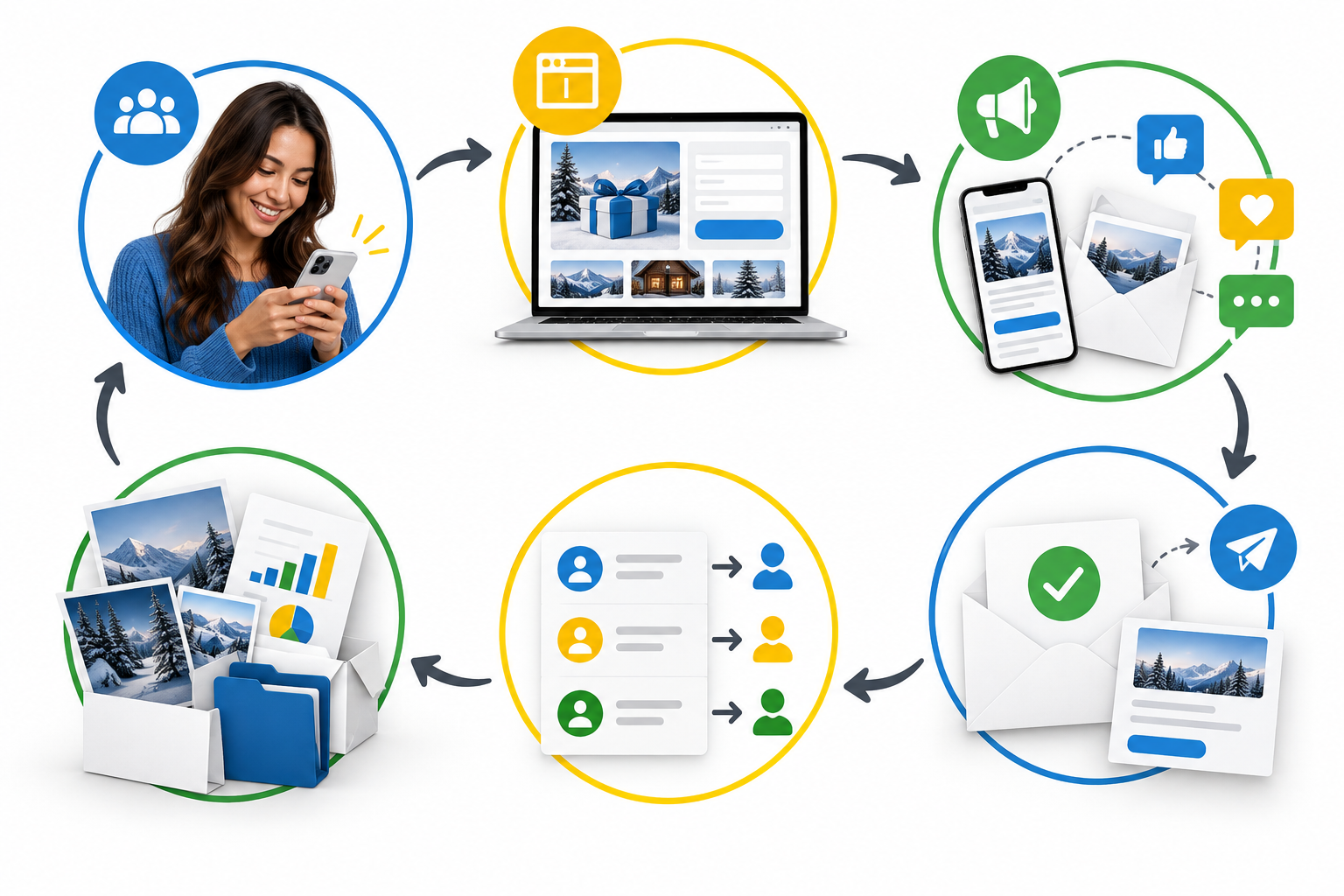
A reusable lead engine has five visible characteristics. The offer attracts a plausible customer. The entry experience sets honest expectations. The data is collected for a defined purpose. Follow-up matches consent and readiness. Measurement produces a decision the team can repeat.
When those conditions are present, a seasonal promotion becomes more than an isolated event. It becomes a controlled way to learn which audience, offer, message, channel, and follow-up process deserve another cycle.
Plan your next campaign
Use this scenario as a pre-launch review. Sweepstakes4U can help organize the landing experience, audience capture, follow-up plan, and review process as one reusable workflow.
Plan your next Sweepstakes4U campaign