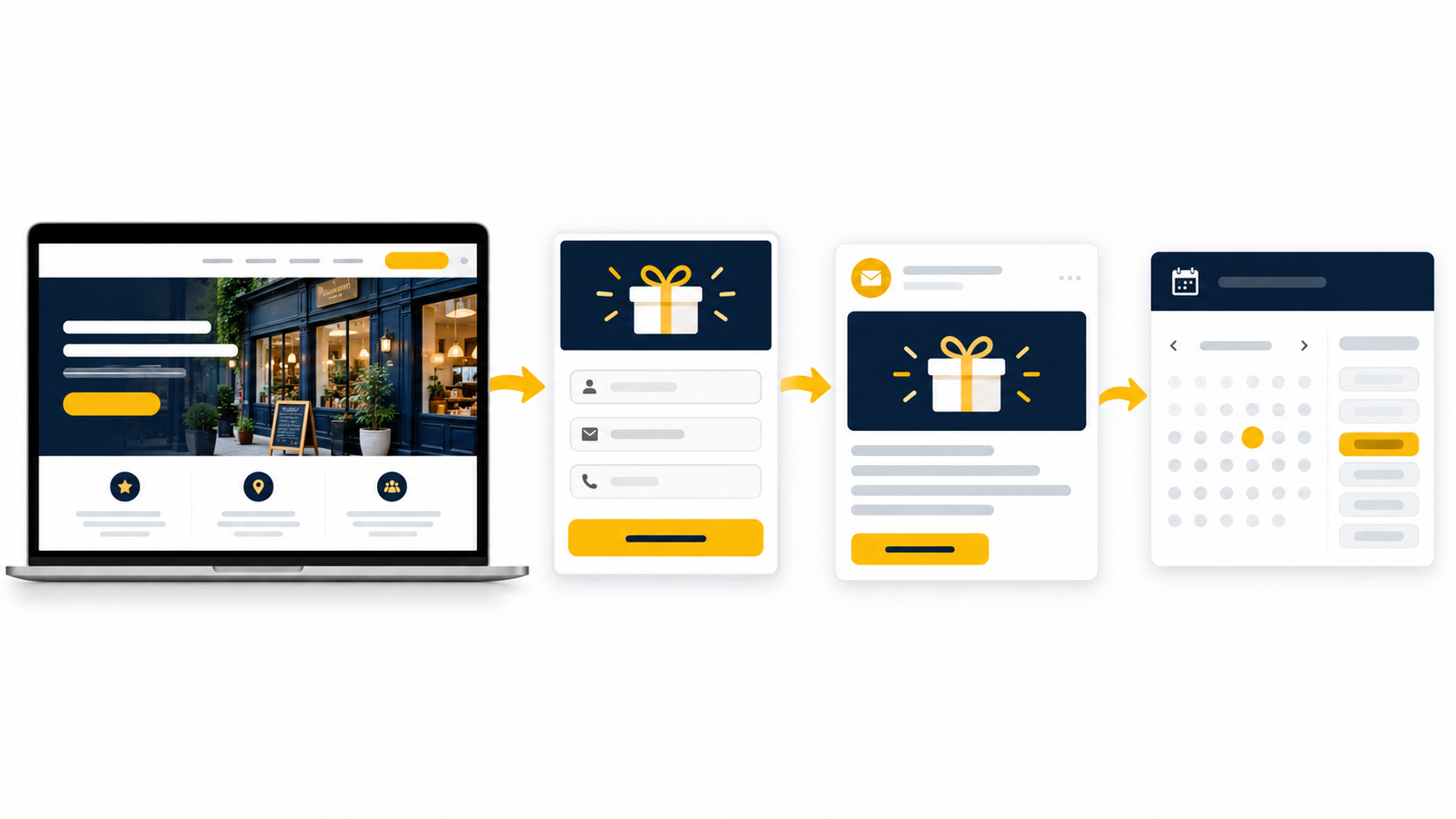
A giveaway can produce a large number of visible interactions and still fail to create useful business value. The problem is usually not a lack of data. It is a lack of structure. When every click, entry, lead, appointment, and sale is treated as equally important, a team cannot tell whether the campaign is working or merely busy.
A practical measurement plan separates metrics by phase. Before launch, confirm that the audience, offer, form, tracking, and follow-up path are ready. During the campaign, find friction between attention and qualified entry. After the campaign, connect participation to business outcomes and document lessons for the next promotion.
What metrics should a business track for a giveaway campaign?
Track five layers: reach, engagement, entries, qualified leads, and business outcomes. Reach shows whether people had a chance to see the campaign. Engagement shows whether the offer earned attention. Entries show whether the landing page converted that attention. Qualified leads show whether entrants match the service area and sales criteria. Appointments, proposals, and customers show whether the campaign created business value.
Do not use entry count as the only success measure. A campaign with 1,000 entries and 20 qualified local prospects may be less useful than a campaign with 300 entries and 75 qualified prospects. Qualification rules and the denominator used in each calculation matter.
The giveaway campaign measurement matrix
| Phase | Metric | Calculation or check | Decision it supports |
|---|---|---|---|
| Before | Eligible audience size | Total audience minus suppressions, duplicates, ineligible locations, and frequency holds. | Is there enough qualified reach to justify launch? |
| Before | Tracking coverage | Verified tracked touchpoints / planned touchpoints x 100 | Can the team distinguish campaign traffic, entries, and lead actions? |
| Before | Form completion burden | Count required fields, optional fields, consent statements, and steps. | Does the form ask only what entry and responsible follow-up require? |
| Before | Follow-up readiness | Ready follow-up paths / planned paths x 100 | Will each qualified entrant receive timely, relevant follow-up? |
| During | Reach | Unique people who received or viewed the campaign. | Is distribution functioning as planned? |
| During | Click-through rate | Unique clicks / delivered emails x 100, or link clicks / impressions x 100 | Is the message strong enough to move people to the landing page? |
| During | Entry conversion rate | Valid entries / campaign landing sessions x 100 | Are the page and entry form clear enough to complete? |
| During | Cost per valid entry | Attributable campaign cost / valid entries | Is the campaign producing participation efficiently? |
| During | Qualified-entry rate | Qualified entries / valid entries x 100 | Are the audience, prize, message, and form attracting people the business can serve? |
| During | Cost per qualified lead | Attributable campaign cost / qualified leads | Is the campaign economically useful compared with other lead sources? |
| After | Speed to first follow-up | Median time between a qualified entry and the first appropriate response. | Are operational delays reducing the value of the leads? |
| After | Lead-to-appointment rate | Appointments / qualified leads x 100 | Does the follow-up and sales handoff convert interest into action? |
| After | Appointment-to-proposal rate | Proposals / attended appointments x 100 | Did the campaign reach prospects with a real service need? |
| After | Proposal-to-customer rate | New customers / campaign-attributed proposals x 100 | Are lead quality and sales execution producing customers? |
| After | Cost per acquired customer | Total attributable campaign cost / campaign-attributed new customers | Can the campaign be repeated or scaled responsibly? |
| After | Learning completion rate | Answered learning questions / planned learning questions x 100 | Did the campaign improve the next one? |
Launch gate: Do not launch until the landing page, form, campaign parameters, confirmation path, and required opt-out or consent language have been tested with authorized test data.
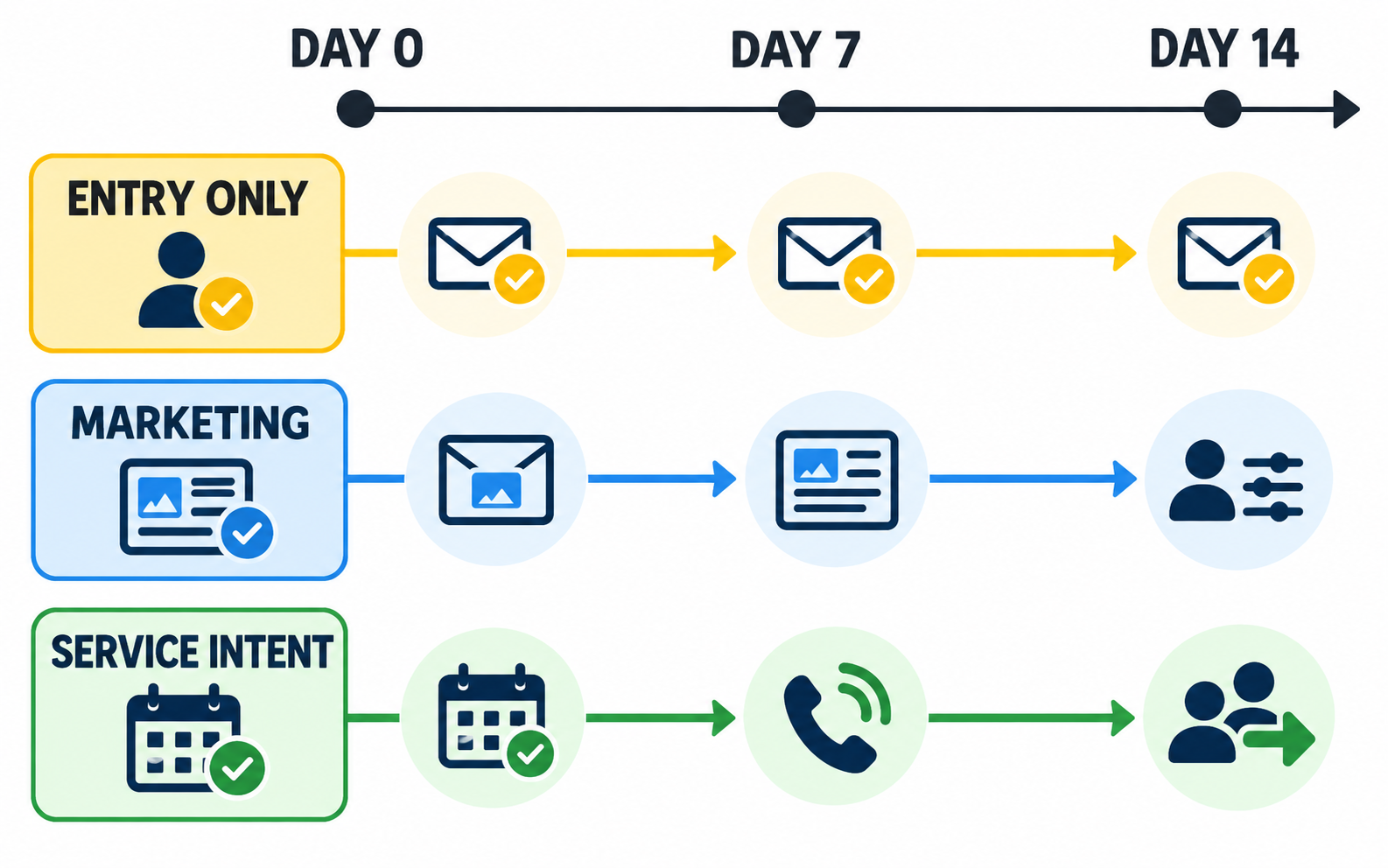
How do you calculate giveaway conversion rate and cost per qualified lead?
Use campaign-specific denominators. Entry conversion rate should use attributable landing sessions, not all website sessions. Qualified-entry rate should use valid entries, not clicks. Cost per qualified lead should include the campaign costs actually required to generate and process those leads.
Illustrative example
- Campaign landing sessions: 1,200
- Valid entries: 360
- Qualified leads: 90
- Attributable campaign cost: $2,700
- Entry conversion rate: 360 / 1,200 = 30%
- Qualified-entry rate: 90 / 360 = 25%
- Cost per qualified lead: $2,700 / 90 = $30
This example is not a guaranteed result or a Sweepstakes4U customer benchmark.
A one-page giveaway KPI dashboard
Keep the operating dashboard short enough to use. Add a data owner and update time to every section.
Before launch
- Eligible audience size
- Tracking coverage
- Follow-up readiness
- Test status
During
- Reach and clicks
- Landing sessions
- Valid entries
- Qualified leads
- Conversion rates
- Cost per qualified lead
After
- Follow-up speed
- Appointments
- Proposals
- New customers
- Acquisition cost
- Three documented lessons
A metric without an owner often becomes a stale number rather than a decision tool. Change one meaningful variable at a time. If the subject line changes, keep the landing page and offer stable. If the form changes, keep the audience and message stable. Otherwise, the team cannot tell what caused the result.
Common measurement mistakes
Treating every entrant as a sales lead
An entry confirms participation. It does not automatically confirm location, service need, timing, homeowner status, or permission for marketing follow-up.
Comparing incompatible channels
Email and paid-social click-through rates use different delivery contexts. Compare each channel against its own prior performance and role in the funnel.
Using platform totals without campaign attribution
Tie website sessions, calls, or leads to the campaign through consistent parameters, landing paths, form fields, and CRM source values.
Optimizing too early
Small early samples can swing sharply. Set minimum observation windows and decision thresholds before launch.
Ignoring operational outcomes
A campaign may generate qualified leads but still underperform because follow-up is slow or inconsistent. Marketing and sales metrics belong in the same review.
Privacy and consent check
Collect only the information needed to operate the promotion, assess clearly stated qualification criteria, and perform authorized follow-up. Distinguish required entry information from optional qualification questions. Keep promotion entry separate from marketing consent when applicable, explain how information will be used, and honor opt-out, suppression, retention, and eligibility requirements. Have qualified legal counsel review the rules and consent language for the campaign's jurisdictions and channels.
Build the measurement plan before the creative
The best time to define campaign metrics is before the first email, ad, or social post is created. Start with the business decision, choose the metric that can answer it, name the data source and owner, and set the review time. Then build the landing page, form, and follow-up flow around that measurement plan.
Measure your next campaign
Sweepstakes4U helps local service teams connect campaign planning, landing-page flow, qualification, follow-up, and measurement from first reach through final learning.
Plan Your Campaign