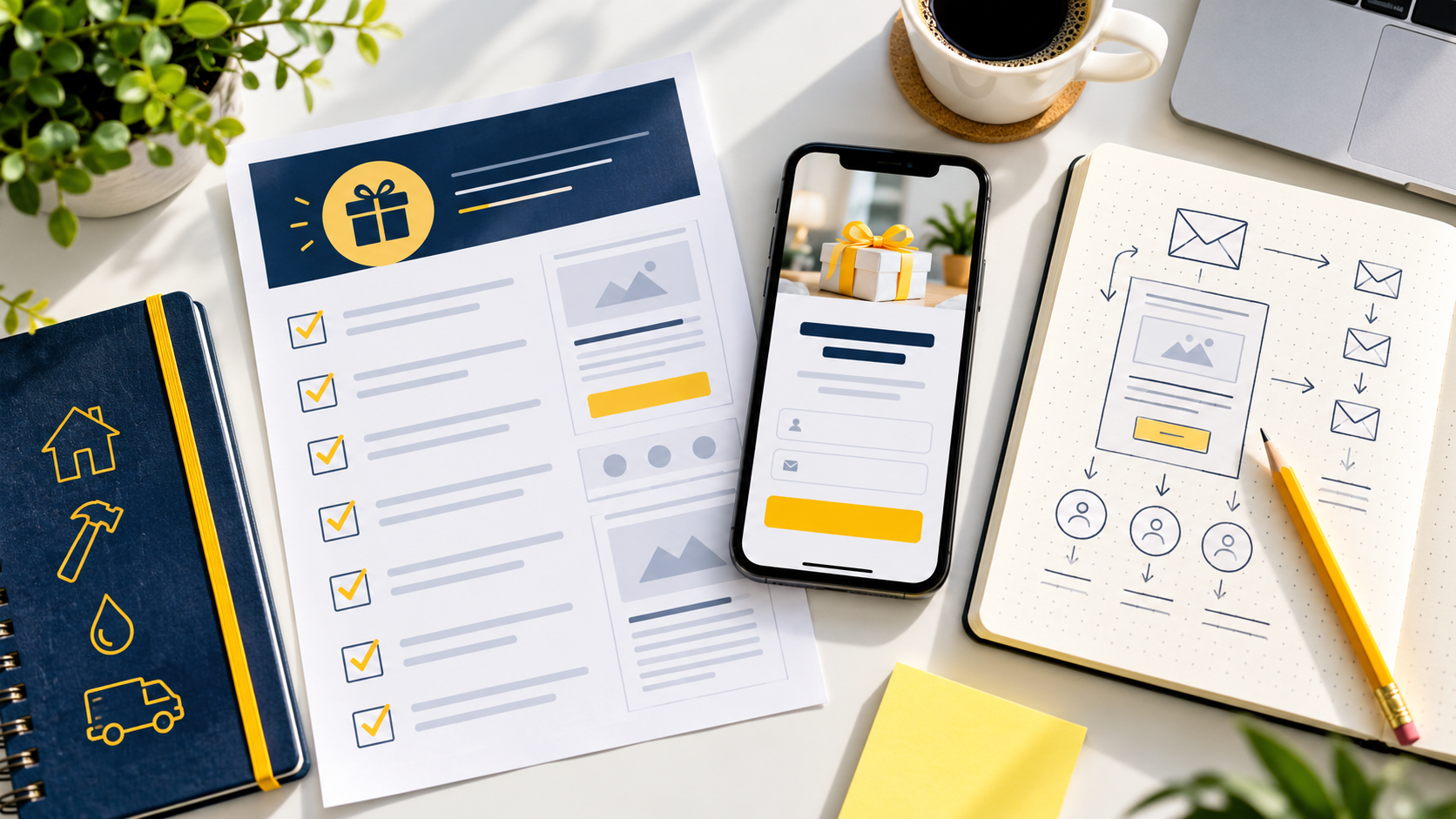
A giveaway landing page is not simply an entry form. For a local service business, it is the handoff between attention and a real next step: a homeowner learns what the promotion is, decides whether it is relevant, and chooses whether to ask for more information, enter, or book a conversation.
Quick answer: What should a giveaway landing page include?
A clear giveaway landing page should state the prize, the intended audience, eligibility, entry period, selection method, and official rules. It should also explain what happens after entry, separate any service offer from the giveaway, use a short relevant form, and give visitors a working privacy and contact path.
1. Start with one promise and one audience
Lead with the campaign's purpose in plain language. A home-service promotion aimed at homeowners should not open with a generic contest message. Connect the prize or education offer to a plausible local customer need: home comfort, a seasonal inspection, a design consultation, or a maintenance planning session.
- Name the relevant homeowner or local-business situation.
- Explain the useful outcome without guaranteeing service results.
- Keep the primary service message distinct from the optional giveaway entry.
2. Make the giveaway terms easy to find
State the entry deadline, geographic or eligibility limits, no-purchase requirement where applicable, approximate prize description, winner-selection process, and link to complete official rules. Promotions may be subject to platform, federal, state, and local requirements; confirm the requirements that apply before launch.
Do not hide service conditions in giveaway copy. If an offer requires a consultation, a service area, a scheduling window, or separate qualification, say so near that action.
3. Ask only for the information you can use
Every field should have an operational purpose. A form for a local giveaway often needs only name, email, zip code or service area, and a clear opt-in choice when marketing consent is sought. A longer form can reduce completion and creates more information for your team to protect.
- Use labels that tell visitors why the field is needed.
- Keep optional questions clearly optional.
- Use a privacy-policy link near submission.
- Record the source and campaign information needed to understand the channel, not more personal data than necessary.
4. Design the next step before launch
Someone who enters should receive a useful confirmation. Someone who requests service should be routed to the appropriate team. Someone who opts out should not receive further campaign messages. Map these paths before promoting the page so the giveaway does not create a pile of unassigned contacts.
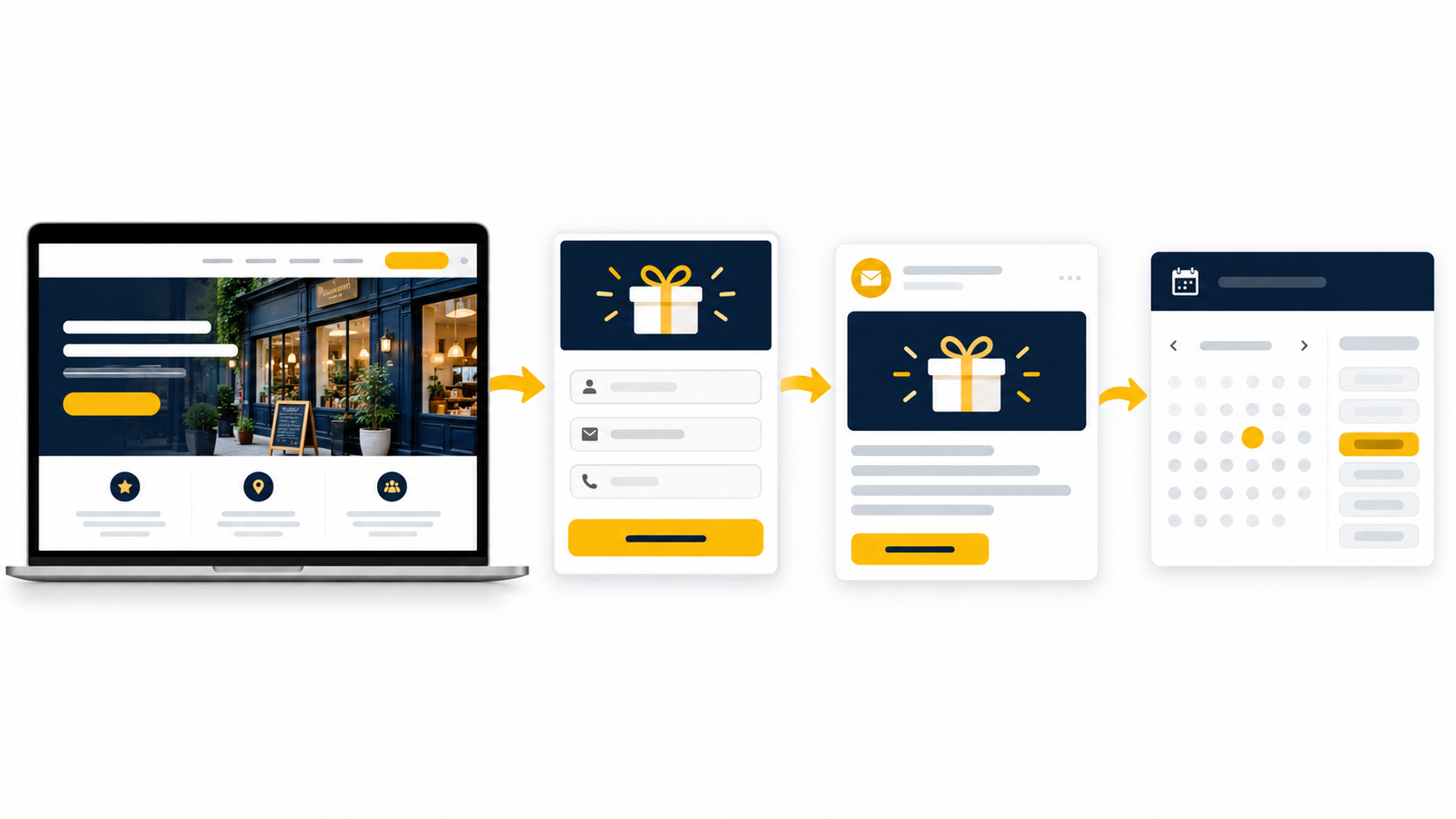
5. Add the trust signals that help a visitor decide
Use a recognizable business identity, a local service-area statement, a reachable contact method, and an accurate description of what happens after submission. If you include customer proof, use permissioned material and avoid claims that cannot be supported. The goal is clarity, not pressure.
6. Keep campaign measurement simple and consistent
Use one canonical page URL and preserve source information from email, social, partner, and field links. Track the action that matters: completed entry, qualified inquiry, consultation request, or booked appointment. Opens and clicks can indicate interest, but they are not proof of a lead or sale.
Pre-launch review checklist
- The headline matches the visitor's channel and the promotion's real purpose.
- The prize, eligibility, date, and official rules are clear.
- The form is short, useful, and paired with a privacy link.
- The confirmation and follow-up owner are identified.
- Every CTA reaches the same working destination.
- Mobile layout, form submission, analytics, and opt-out behavior have been tested.
Plan a clearer local promotion
Sweepstakes4U helps local-service teams coordinate the promotion, landing experience, lead capture, and follow-up so every campaign has a useful next step.
Get Promotion Ideas