
A prize can attract people who would never buy the service. That is fine for a promotion, but it becomes expensive when every entrant is routed straight to a salesperson. The better approach is to let everyone enter under the published rules, then collect a few optional, useful signals that identify who also wants help with a relevant project.
Qualification should make the next conversation more useful, not make the entry form feel like an application. For a local service business, five signals usually matter: service area, service need, project timing, property or decision-maker fit, and permission for follow-up. Keep the prize-entry requirements and any optional sales questions visibly distinct.
Ask only what changes the follow-up
Start with a short core form: name, email, and whatever information the promotion actually requires. Then add a small section such as "Interested in a project?" with optional choices. A practical version might ask:
- ZIP code or service location: Can this business serve the entrant?
- Service interest: Which project, if any, is relevant?
- Timing: Is the need immediate, within three months, later, or just exploratory?
- Decision context: Is the entrant the homeowner or someone helping make the decision?
- Follow-up choice: Would they like a service consultation or marketing updates?
Do not force someone to claim a project merely to enter a giveaway unless the official promotion rules genuinely require it. Avoid collecting detailed property, budget, or health information when a broad category will do. Every extra field needs a clear operational purpose.
A simple routing model
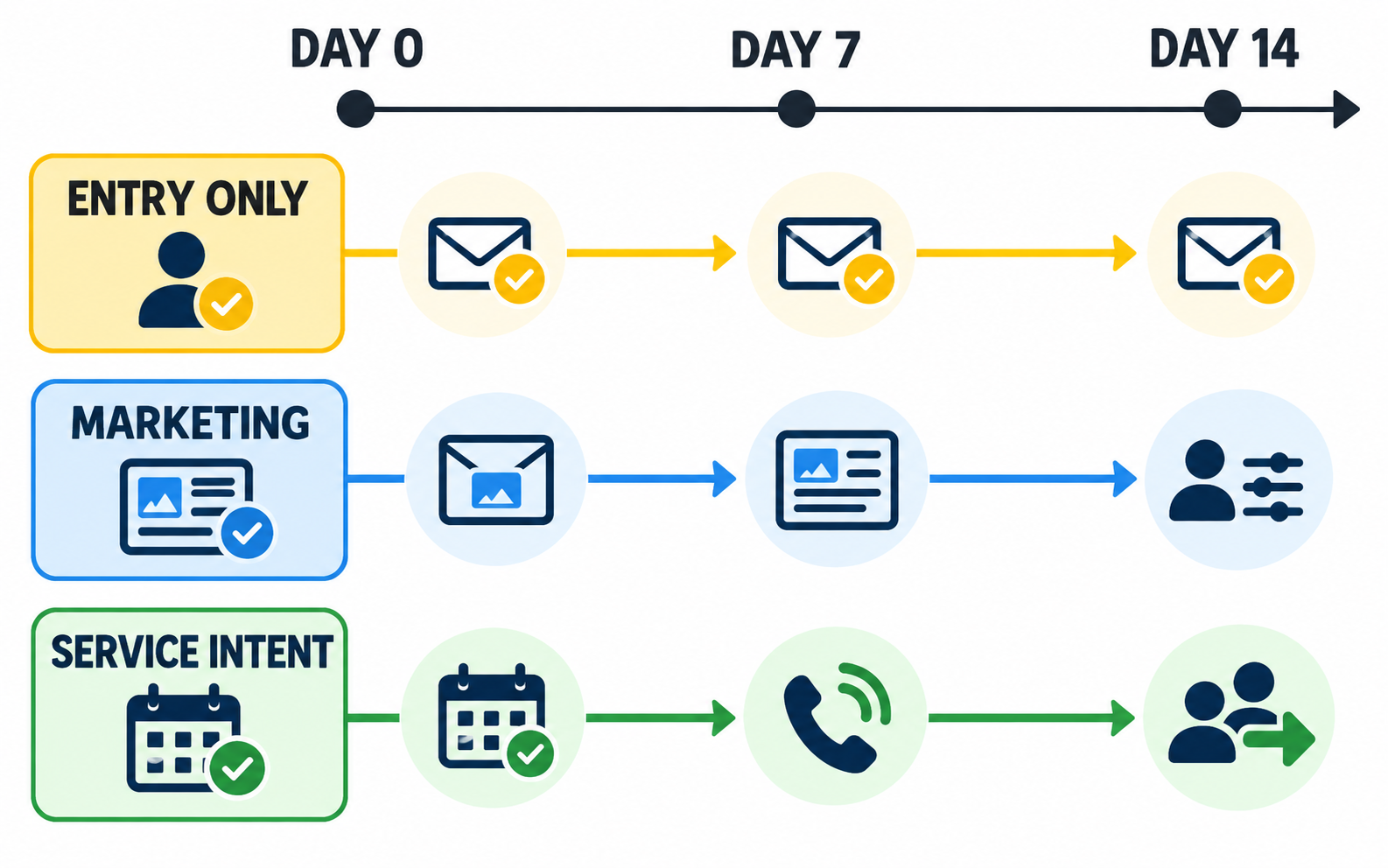
Use the answers to create three operational groups, not a black-box score.
Ready for sales: In the service area, names a relevant need, asks for contact, and indicates near-term timing. Send the chosen details to the appropriate sales queue with the original source and the exact request.
Nurture: In the service area and interested in the service, but not ready to talk. Use only the follow-up channel they chose. Give them useful planning material and an easy way to change preferences.
Promotion only: Entered for the prize, gave no service signal, or did not request marketing follow-up. Keep the entry and fulfillment record, but do not create a sales task from it.
A "not now" answer is not a bad lead. It is a better instruction to the system. Likewise, a person outside the service area may still be eligible for the promotion, depending on its rules, while being a poor fit for local sales outreach.
Make consent and ownership explicit
The entry page should say what data is needed to administer the promotion and what is optional. Present any marketing sign-up separately in plain language. Record the selected choice, timestamp, form version, and source campaign so downstream agents do not have to guess why an address exists. Honor opt-outs and suppressions in every later send. In the United States, commercial email also has CAN-SPAM requirements, including a working opt-out mechanism; the FTC's business guide is linked below.
The handoff to sales should include a reason, not just a score: "Requested a roof estimate in ZIP 95814 within 30 days" is actionable; "lead score 82" is not. Assign one owner, set a response window appropriate to the request, and prevent the same entrant from creating duplicate tasks through repeat entries or overlapping campaigns.
Measure lead quality, not only entry volume
Report the funnel by source and campaign: eligible entries, entrants who gave a relevant service signal, explicit consultation requests, sales-accepted leads, appointments, and eventual outcomes. Show the counts and definitions together. A high entry count with few accepted leads is a useful warning about the prize, targeting, or form language. A smaller campaign can be better when it produces more qualified conversations without increasing complaints or unsubscribes.
Before launch, test the form on desktop and mobile, submit each route, verify the owner assignment, inspect the confirmation email and opt-out path, and confirm that prize entry remains available under the official rules. Then review the first week's real answers and remove any question that adds friction without improving routing.
Design a qualified-entry form
Map the five signals to your own service area and sales process. Keep the entry simple, make optional interest clear, and let the resulting handoff tell your team exactly why a conversation is worth starting.
Plan Your CampaignSource and review note
FTC: CAN-SPAM Act, a Compliance Guide for Business. This article offers an operational framework, not legal advice. Check the promotion's official rules, privacy notice, and applicable law before launch.