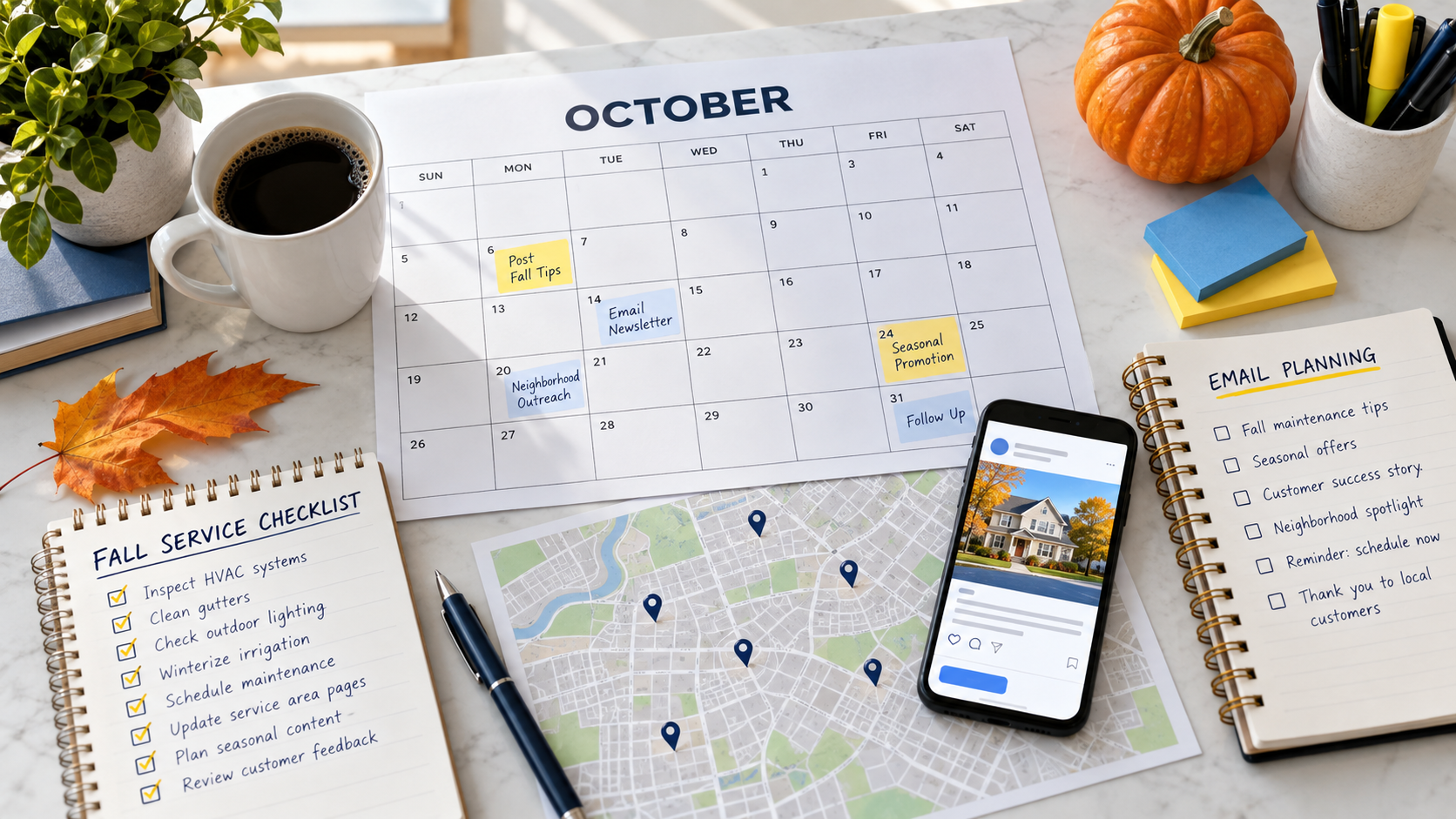
October gives local service businesses several legitimate reasons to speak to customers: seasonal maintenance, scheduling before colder or wetter weather, year-end project planning, and community events. It also creates a messaging problem. When every promotion says "act now," the customer still needs to understand what the service is, whether it applies to them, and what happens next.
The useful question is not "How do we capture more attention?" It is "Which decision are we helping this customer make?" A clear October campaign gives one audience one reason to act and one next step. A giveaway can support that campaign, but it should not replace the service promise.
What should a local service business promote in October?
Promote a service that has a real seasonal or scheduling reason to be considered now, such as an HVAC inspection, a home weather-readiness assessment, or a project consultation. State the audience, benefit, timing, and next action in plain language. If there is no meaningful October reason, do not invent urgency; offer useful planning information instead.
Use a three-part offer check
- Customer situation. What task is the customer already trying to complete? A homeowner may be planning heating maintenance, a contractor may be filling a fall project calendar, and a retailer may be preparing for holiday demand. These are hypotheses to validate against your own inquiries, not claims about every customer.
- Service promise. What will the business actually provide? "Book a heating-system inspection" is clearer than "Unlock fall comfort." Give a brief scope, eligibility limits, service area, and whether the next step is a quote, visit, or information request.
- Action and timing. Is there a genuine appointment window, offer end date, or operational limit? Show it consistently in the email, Business Profile update, landing page, and follow-up. If timing is flexible, say so.
A simple October campaign example
Consider a local HVAC business with open inspection appointments. Its audience is homeowners within the service area who have opted in to marketing. The offer is a fall system inspection with a defined scope. The primary action is "Check appointment availability." The landing page repeats that promise, explains what the visit includes, identifies the service area, and shows the booking path.
The email subject tests two honest framings, not two different offers: a maintenance-led version and a scheduling-led version. Compare the versions on qualified clicks and appointment requests while keeping the audience, service, page, and send window consistent. A higher open rate alone would not prove better service demand.
Where a giveaway fits
A prize promotion is useful only when it strengthens the service conversation. A homeowner-focused giveaway might bring the right local audience to a clearly labeled entry page, followed by a separate, optional invitation to learn about fall services. Entry and marketing opt-in must not be presented as the same decision. Keep the prize, eligibility, dates, no-purchase entry route, and material terms prominent, and review applicable state rules before launch.
If the giveaway attracts many prize seekers but few relevant service inquiries, keep it separate from the primary appointment campaign. Do not route every entrant to sales or count every entry as a qualified lead.
Keep each channel consistent
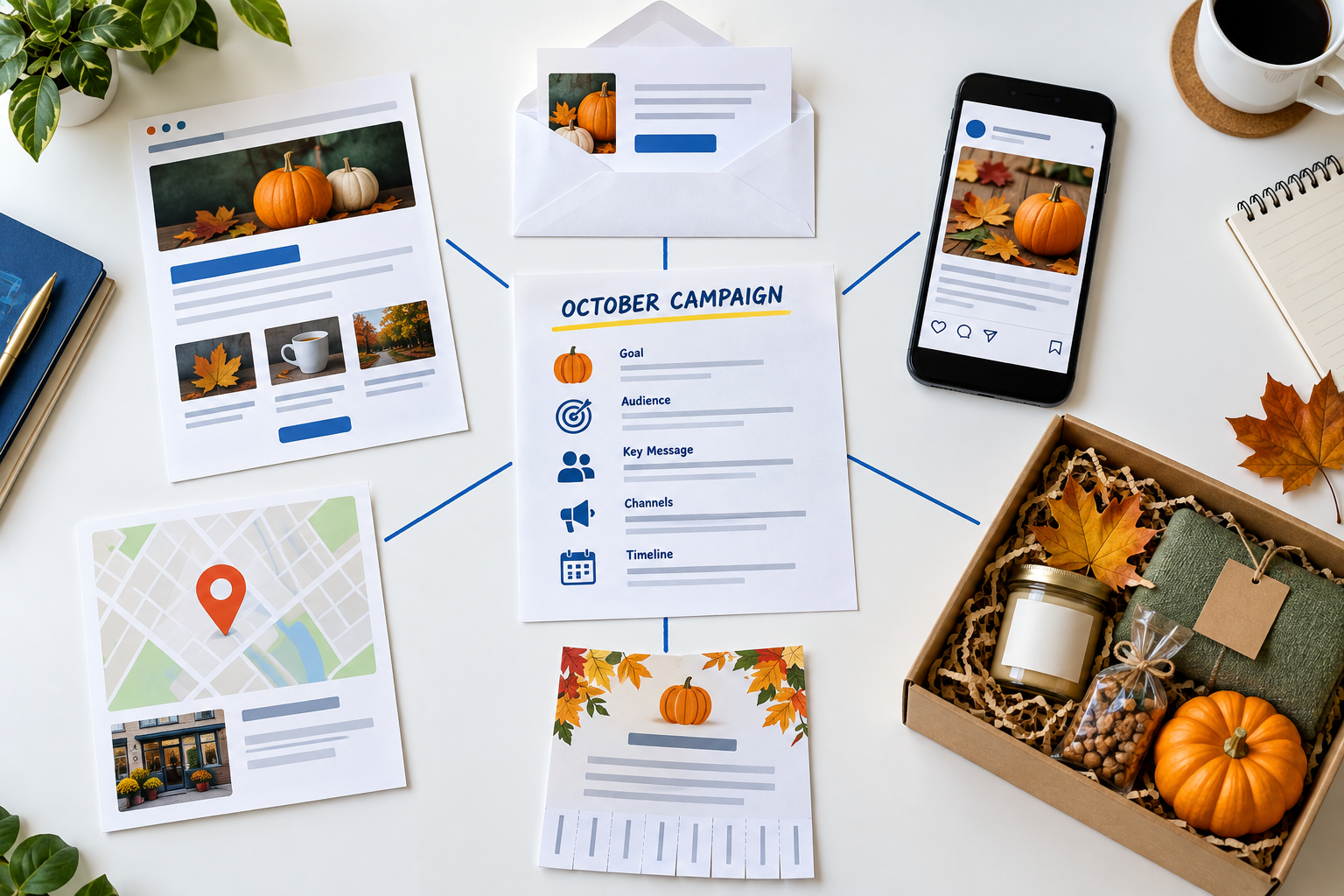
An October offer can appear in an email, on a landing page, and in a Google Business Profile update. Google supports updates, offers, and events on Business Profiles; offer posts use a title and dates and may include terms and conditions. Whatever channels you use, keep the service promise and destination aligned. A customer who clicks "Check appointment availability" should not land on a generic giveaway page.
Before launch, read the entire path on mobile: subject or post, CTA, landing headline, form, confirmation, and follow-up. Confirm that offer conditions are visible before a visitor submits information. Measure appointment requests or other meaningful actions in addition to opens and clicks.
A five-minute owner review
Ask: Is the audience specific? Is the service promise accurate? Is the timing real? Does the destination fulfill the CTA? Are giveaway entry and marketing permission separate where relevant? Can we tell whether the campaign produced qualified requests? If any answer is unclear, revise the package before release.
Plan a clearer promotion
Choose one October service opportunity and map its audience, promise, CTA, landing page, and follow-up before adding extra channels or a giveaway. Sweepstakes4U can help turn that plan into a reviewable campaign.
Plan a Clearer Promotion